Saturday, 2 June 2018

Blood test offers hope of finding cancers before symptoms develop

Promising new research enables scientists to use a blood test to screen for different types of cancers at early stages.
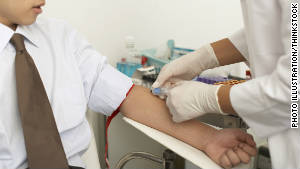
The test, known as a liquid biopsy, is used to screen for DNA from cancer cells and was able to detect 10 different cancers with good accuracy.
Dr. Eric Klein from the Taussig Cancer Institute at Cleveland Clinic in the United States led the research, which is to be presented at the annual conference of the American Society of Clinical Oncology in Chicago, the largest gathering of oncologists worldwide.
    Most cancers are detected at advanced stages when treatment is more complicated and cure rates are low, the conference abstract states.
    The non-invasive DNA blood test isn't yet ready to use in practice, but the test would enable cancers to be detected in the early stages, before symptoms begin, when treatment is more likely to succeed. These types of tests could become part of a universal screening process for cancer.
    "Detecting cancer early, before it has spread is one of the most powerful ways to ensure more people are offered treatments which give them a better chance of beating the disease," said Fiona Osgun of Cancer Research UK, who was not part of the study.
    The research sampled 1,627 participants, of which 749 were cancer-free and 878 had various types of newly detected, untreated cancer
    The blood test involved three tests on the participants' blood samples and showed sensitivity in detecting 10 different types of cancer, including pancreatic, ovarian, lung and esophageal cancer, among others.
    The results showed that the test most accurately diagnosed ovarian cancer, with 90% accuracy, followed by hepatobiliary -- a highly lethal cancer that attacks the liver and gallbladder -- and pancreatic cancer, with 80% accuracy.
    The test's high sensitivity to pancreatic cancer is especially promising. Pancreatic cancer is usually diagnosed when the cancer is too advanced to be operated on, said Dr. Chris Abbosh, a clinical research associate at University College London's Cancer Institute.
    However, it's important to note that the number of people in which these cancers were detected was small. For both ovarian and pancreatic cancer, only 10 cases were detected, while only five people with hepatobiliary cancer were identified.
    Head and neck cancer as well as lung cancer were detected with the least accuracy, at 56% and 59%, respectively.
    But the results are promising. The ability to diagnose cancer early on and then offer patients effective treatment for their disease will likely save many lives, according to Dr. Nickolas Papadopoulos, professor of oncology and pathology at Johns Hopkins Medicine and senior author of a study on blood tests for the early detection of cancer.
    For many common cancers, rates of survival triple when diagnosed at an early stage, according to Cancer Research UK.
    .
    There's more work to do before it can be used regularly, though.
    "There's still a lot more research needed to achieve this goal. This blood test was better at picking up certain cancers than others so we need further trials to test its accuracy and also determine whether it will help save lives," said Osgun.
    Gerhardt Attard, John Black Charitable Foundation Endowed Chair in Urological Cancer Research at University College London, believes that this may soon become a common method for cancer screening.
    "This is moving exceptionally fast. I think that in the next few five to 10 years, if this continues to work like this, we may see this coming through into normal practice," Attard said.
    But Abbosh notes several caveats around the research.
    "To match the promise of being able to screen for cancer, this test must be able to identify patients who do not have symptoms or signs of cancer. Finally, it will be important to establish how good this test is at identifying patients with the earliest stage of cancer. In stage I disease, surgical interventions are most likely to remove all a patient's cancer and result in a cure -- this data is no yet available," Abbosh said.
    Dr. H. Gilbert Welch, professor of medicine at the Dartmouth Institute for Health Policy and Clinical Practice, said that the analysis involved in these tests is "extraordinarily complex."
    "There are a lot of steps in a liquid biopsy and much potential for things to go awry," he said.

    Friday, 1 June 2018

    Riding the world's most luxurious train with the visionary designer who built i

    while Japan's bullet trains may be famed for their speed, there is a train in Japan that has garnered a more exclusive reputation. Demand is often so high for a trip on this luxury sleeper train -- and space"Everything is unique and custom-made for the train," said Seven Stars' 70-year-old designer, Eiji Mitooka. "From the seats, to the lighting, to the furniture, our theme was to mix elements like mandalas -- drawing inspiration from East and West -- to come up with something we've never seen."
    From delicate, handmade porcelain sinks to framed miniature paintings by Mitooka himself, which are hung along the corridors, no detail has been overlooked. In the lounge, a panel of "kumiko," traditional Japanese woodwork, is backlit to showcase its intricate lattice patterns. A star motif is used throughout: the gold symbols adorn ceiling tiles, are carved into table lamps, and colored onto stained glass.
    When Mitooka was first approached to design the train, he took inspiration from the Orient Express, but he wanted to create something that would resonate with older Japanese travelers, creating a sense of nostalgia.
    Upon boarding the Cruise Train Seven Stars at the busy Hakata Station in the city of Fukuoka, passengers step into another world. The train's warm wooden interiors and classic design elements evoke another time.

    "I think, for a long time, Japanese people believed the greatest journey was to travel to Europe or America; to experience different cultures, see the best things there, eat the best food there," he said.
    "But for those of us in our 50s, 60s and 70s, the most comfortable and relaxing journey is one where Japanese is spoken, we can enjoy Japanese food, served in the Japanese way. We can rediscover Japan."


    Friday, 20 April 2018

    New species of 'exploding ants' discovered in Southeast Asia


    Fifteen new species of “exploding ants” – including one entirely new to science – have been discovered in Southeast Asia, Gizmodo reported, citing the results of a survey published Thursday in the science journal ZooKeys.
    These new species, dubbed “Colobopsis explodens” are capable of rupturing their abdominal walls to secrete a sticky toxic liquid that kills predators and themselves.
    Scientists have surveyed other species of “exploding ants” for decades but a deficit of new evidence since 1935 prompted a multi-disciplinary team of Viennese scientists to explore Southeast Asia.
    The researchers observed the ants displaying an array of behavioral patterns that served the interests of their colonies rather than themselves. The drive to perpetuate their own genes, like most creatures, were secondary to the needs of the colony.
    The ants were observed creating bridges or life rafts with their bodies, transporting other wounded ants, and even providing “medical care” in some instances.
    Self-sacrifice was most commonly carried out among so-called minor workers, the survey detailed. In some instances, the ants blew themselves when the scientists got too close.
    The ants feed upon algae, most, fungi, dead insects, fruit, and fish, the survey showed

    Wednesday, 18 April 2018

    Google Launches Chrome 66 For Windows, Mac, Linux, Android And iOS

    Google has announced the promotion of the Chrome 66 browser to the stable channel for Windows, Mac, Linux, Android and iOS. The updated Google Chrome browser is being rolled out over the next few weeks. Some of the new features in Chrome 66 include media auto-play changes, the ability to export passwords and several security fixes.
    One of the biggest features added in Chrome 66 is the auto-playing of content being switched off by default. For example, I immediately noticed that YouTube videos no longer automatically played when I opened those links in new tabs and I switched to those tabs in the latest version of Chrome.
    Google has been working on ways to provide better control over audio in its browser for a while now. Last year, Google Software Engineer Mounir Lamouri wrote that one of the most frequent user concerns is “unexpected media playback,” which consumes data and power along with causing unwanted noise while browsing. So back in January 2018, Google Chrome 64 added the ability to disable sound for specific sites by right-clicking on a tab and tapping on “Mute Site.”
    Google also added an option to “Export Passwords.” This can be found under Settings > Advanced > Passwords and forms > Manage passwords > Saved Passwords menu:
    Tapping on this option prompts users to input their computer password. After authorizing the download, the passwords you have saved on Chrome will be exported as a CSV file.
    Google Chrome 66 for Android and iOS also supports the ability to export passwords. On Android and iOS, you can see this option by tapping on the overflow icon in the Passwords menu and a system Share sheet appears when you select it. Chrome will ask you to verify your identity through passcodes, facial recognition, fingerprint scan, etc. Here is what the feature looks like on iOS:

    From a developer standpoint, Chrome 66 has a new rendering context that streamlines the display of ImageBitmap objects by mitigating memory duplication. Chrome 66 also implements the CSS Typed Object Model (OM) Level 1 -- which “reduces this burden on both the developer and browser by exposing CSS values as typed JavaScript objects rather than strings.” And there is a new asynchronous Clipboard API that provides a “promise-based means of reading from and writing to the clipboard.
    It's also worth mentioning that Google Chrome 66 includes a small percentage trial of Site Isolation in order to prepare for a broader upcoming launch. Google said that Site Isolation improves the security of Chrome and mitigates the risks posed by side-channel attack techniques such as Spectre/Meltdown.
    9to5Google pointed out that the “Chrome Home” bottom bar has been redesigned and replaced with the “Chrome Home Duplex” in the Android version of Chrome 66. And a new bottom toolbar can be slid up to open a New Tab.
    At the Chrome Dev Summit in November 2016, Google revealed that Chrome hit 2 billion installs in active use across desktops and mobile devices. That figure should not be confused from the number of total users, which is somewhere north of 1 billion.
    You can update to the latest version of Chrome by going to google.com/chrome. Or go to Settings > About Chrome to see if your version is up to date. And The full changelog of Chrome 66 can be found on Google Git.


    Monday, 16 April 2018

    Andhra transforming its capital into world class city

    Andhra transforming its capital into world class city

    In its post bifurcation scenario, the state of Andhra Pradesh is constructing a world-class city in its capital Amaravati.

    Approximately 3840 apartments in 61 towers are being built in the Amaravati capital region. Three companies – Shapurji Pallonji, Larsen & Toubro and Nagarjuna Construction Company are building these towers.
    Shapurji Palonji is building 21 towers – 1440 apartments for Type 1, Type 2 government officers and Group D employees. L&T is building 22 towers with 1968 apartments for NGOs. All these 43 towers are under construction at Nelapadu village.
    Nagarjuna Construction Company is building up 18 towers having 432 apartments for MLAs, MLCs and All India Services Officers at Rayapudi village.
    The Department of Municipal Administration and Urban Development led by minister P Narayana is looking after this urbanization project.
    The complete construction of these buildings is expected to finish by the end of this year

    NASA's New Planet-Hunter To Seek Closer, Earth-Like Worlds

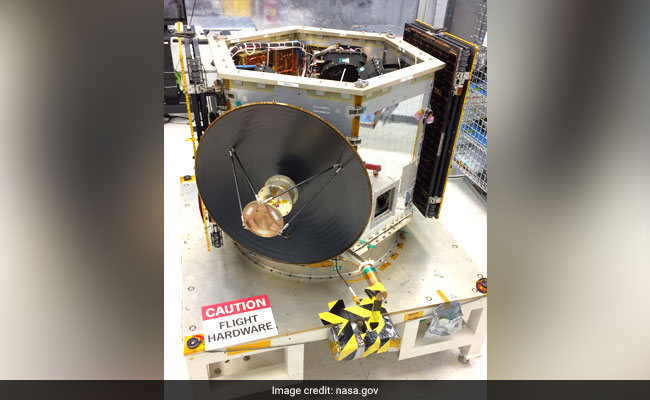
    The Transiting Exoplanet Survey Satellite, or TESS, is scheduled to launch Monday at 6:32 pm (2232 GMT) atop a SpaceX Falcon 9 rocket from Cape Canaveral, Florida.

    TAMPA, UNITED STATES:  NASA is poised to launch a $337 million washing machine-sized spacecraft that aims to vastly expand mankind's search for planets beyond our solar system, particularly closer, Earth-sized ones that might harbor life.
    NASA's New Planet-Hunter To Seek Closer, Earth-Like Worlds
    NASA predicts that TESS will discover 20,000 exoplanets -- or planets outside the solar system

    The Transiting Exoplanet Survey Satellite, or TESS, is scheduled to launch Monday at 6:32 pm (2232 GMT) atop a SpaceX Falcon 9 rocket from Cape Canaveral, Florida.

    Its main goal over the next two years is to scan more than 200,000 of the brightest stars for signs of planets circling them and causing a dip in brightness known as a transit.

    NASA predicts that TESS will discover 20,000 exoplanets -- or planets outside the solar system -- including more than 50 Earth-sized planets and up to 500 planets less than twice the size of Earth.

    "They are going to be orbiting the nearest, brightest stars," Elisa Quintana, TESS scientist at NASA's Goddard Spaceflight Center, told reporters on Sunday.

    "We might even find planets that orbit stars that we can even see with the naked eye," she added.

    "So in the next few years we might even be able to walk outside and point at a star and know that it has a planet. This is the future."

    Follow-on to Kepler

    TESS is designed as a follow-on to the US space agency's Kepler spacecraft, which was the first of its kind and launched in 2009. Now, the aging spacecraft is low on fuel and near the end of its life.

    Kepler found a massive trove of exoplanets by focusing on one patch of sky, which contained about 150,000 stars like the Sun.

    The Kepler mission found 2,300 confirmed exoplanets and nearly 4,500 candidates. But many were too distant and dim to study further.

    TESS, with its four advanced cameras, will scan an area that is 350 times larger, comprising 85 percent of the sky in the first two years alone.

    "By looking at such a large section of the sky -- this kind of stellar real estate -- we open up the ability to cherry-pick the best stars to do follow up science," said Jenn Burt, a postdoctoral fellow at the Massachusetts Institute of Technology (MIT).

    "On average the stars that TESS finds observes be 30-100 times brighter and 10 times closer than the stars that Kepler focused on."

    Since TESS uses the same method as Kepler for finding potential planets, by tracking the dimming of light when a celestial body passes in front of a star, the next step is for ground-based and space telescopes to peer closer.

    The Hubble Space Telescope and the James Webb Space telescope, scheduled to launch in 2020, should be able to reveal more about planets' mass, density and the makeup of their atmosphere.

    "TESS forms a bridge from what we have learned about exoplanets to date and where we are headed in the future," said Jeff Volosin, TESS project manager at NASA's Goddard Spaceflight Center.

    By focusing on planets dozens to hundreds of light-years way, TESS should be a stepping stone to future breakthroughs, he said.

    "With the hope that someday, in the next decades, we will be able to identify the potential for life to exist outside the solar system."

    COMMENTS
    Weather was expected to be 80 percent favorable for launch.

    Thursday, 5 April 2018

    Blackbuck poaching case: Salman Khan gets 5 years in jail, other accused let off

    NEW DELHI: In a major setback to actor Salman Khan, a Jodhpur trial courttoday sentenced him to 5 years in jail in the 1998 blackbuck poaching case. Other accused in the case were acquitted.

    Jodhpur District Presiding Officer Devkumar Khatri pronounced Salman guilty of killing two blackbucks, which are an endangered species, on October 1, 1998 during a hunting expedition near Jodhpur, Rajasthan. A penalty of Rs 10,000 has also been levied on him.

    Co-accused Saif Ali Khan, Sonali Bendre, Neelam and Tabu were present in court during pronouncement of the verdict. There are two other accused in the case -- travel agent Dushyant Singh and Dinesh Gawre, Salman's assistant at the time. Gawre is still absconding.

    The actors are accused of hunting down two blackbucks in Kankani village near Jodhpur on the intervening night of October 1 and 2, 1998. The actors were in the city for the shooting of the film 'Hum Saath Saath Hain'.

    Salman, 52, had earlier pleaded innocence in the case, claiming before the court that the blackbuck died of "natural causes" and he was being "framed".


    Salman is facing charges under Section 51 of the Wildlife (Protection) Act and the other actors have been charged under Section 51 read with Section 149 (unlawful assembly) of the Indian Penal Code. Maximum punishment under Section 51 is six years.

    H M Saraswat, the defence counsel for Salman Khan, said there are many loopholes in the prosecution's case and the prosecution has failed to prove the case beyond any doubt.


    "Prosecution has failed to prove allegations against the accused and has engaged in tampering and fabricating evidences and documents as well as roping in fake witnesses to prove the case. It has even failed to prove that black bucks were killed by gunshots. Hence such investigation cannot be trusted upon", Saraswat said during final arguments on March 28.

    TOP COMMENT

    He crushed a person under his wheels to death while driving drunk and yet roams free , his political patrons will save him againAshwin Sicario


    This is last of the three poaching cases against Salman from 1998 that is being heard at Jodhpur trial court. He was convicted in two poaching cases by trial court, only to be acquitted by the Rajasthan high court later.